線上客服
客服團隊
剛剛
親愛的 LBank 用戶
我們的線上客服系統目前遇到連線故障。我們正積極修復這一問題,但暫時無法提供確切的恢復時間。對於由此給您帶來的不便,我們深表歉意。
如需幫助,您可以透過電子郵件聯繫我們,我們將盡快回覆。
感謝您的理解與耐心。
LBank 客服團隊
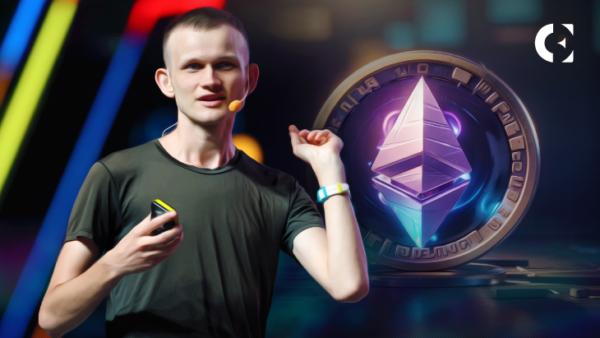
Ethereum architect Vitalik Buterin has ignited a structural debate within the community after proposing the implementation of a decentralized, trustless gas futures market. The mechanism is designed to provide users a vehicle to hedge against transaction cost volatility, offering superior cost predictability during periods of network congestion.
Interestingly, the proposal came after repeated questions about whether Ethereum can guarantee low and consistent fees in the coming years, even as the network scales.
Buterin explained that while upcoming improvements, including higher gas limits, better proposer-builder separation, and future zero-knowledge infrastructure, are intended to keep fees low, many users remain uncertain.
A gas futures market, he said, would allow participants to lock in base fees for future time windows. This would function much like traditional commodities futures markets, giving traders, developers, and institutions the ability to plan ahead and avoid unexpected spikes.
The proposal arrived shortly after Ethereum developers deployed the Fusaka update on the mainnet on . The rollout was followed by a failure in the Prysm consensus client, temporarily disabling a portion of validators.
Buterin said an on-chain gas futures market would accomplish two goals. First, it would create a visible signal of expectations around future gas fees.
Second, it would let users prepay for blockspace in specific time intervals, securing predictable costs. This would especially benefit heavy network participants such as decentralized application teams, trading firms, and high-volume operators.
He also noted that this type of financial tool could serve as a core component for Ethereum’s maturing economy. Fee volatility remains a challenge even though average costs have dropped throughout 2025.
Basic transfers now sit around 0.474 gwei, equal to roughly one cent. More complex operations still cost more, with token swaps around $0.16, NFT transactions about $0.27, and cross-chain bridging near $0.05.
Meanwhile, data from shows average fees started the year near $1, fell to $0.18 at their lowest point, and briefly spiked to $2.60. A futures market, Buterin argued, would help smooth these fluctuations and create a more stable for long-term planning.
Additionally, this conversation also revived older debates around mechanisms that once helped users offset gas spikes, such as Gas Tokens. Tezos co-founder Arthur Breitman warned that such tools introduced security weaknesses.
Buterin and compared them to other protocol changes that were unpopular at the time but necessary for long-term safety, including the introduction of transaction gas limits and restrictions on the SELFDESTRUCT function.
剛剛
親愛的 LBank 用戶
我們的線上客服系統目前遇到連線故障。我們正積極修復這一問題,但暫時無法提供確切的恢復時間。對於由此給您帶來的不便,我們深表歉意。
如需幫助,您可以透過電子郵件聯繫我們,我們將盡快回覆。
感謝您的理解與耐心。
LBank 客服團隊