You have done a great job of researching and analyzing the various charts and the white paper. You have also been through the Member Directory of LinkedIn for the team so that you can feel confident that you have done your due diligence on this project; however, there is one critical piece of information that you still need to research before you decide whether or not to invest in this project. The Smart Contract Audit Report, which is typically used to assess the security of a project's smart contract, is not something that can simply be overlooked.
Unfortunately, most investors in cryptocurrency will not read the audit report; however, they do know they exist - just like they are aware there is fine print on their credit cards! Missing that audit report is a huge error! It's been reported that of every single crypto project to have been hacked and compromised in 2024, only about 10% of those projects had been audited; however, of those projects able to have been audited, there were many that still failed. Many of those projects had red flags in their audit report that should have been easily identifiable - if only the investors had been trained on how to identify those issues!
What Is a Smart Contract Audit Report, Really?
Smart contract audit reports are the result of an independent audit of a software project's deployed or predeployment code performed by an independent security consulting company (like CertiK, OpenZeppelin, Hacken, or ChainSecurity). These auditors will use both automated scanning tools (like Slither and Mythril) as well as perform a line-by-line manual analysis of the code to identify vulnerabilities and logical errors and attack surfaces within the smart contract.
The results of the audit will be provided in the audit report and will contain the identified problems within the smart contract as well as their severity and whether the problem has been resolved by the project development team. Audits do not produce a pass/fail outcome; therefore, it is important to understand that an audit is considered to be a snapshot of the code base at a specific point in time before considering an audit to be a purchasing signal.
Start With the Scope: What Was Actually Audited?
The first step I take when examining an audit report is reviewing its scope. This informs me of the specific smart contract files that were audited, what blockchain the contract is deployed to, and which programming language was used (i.e., Solidity, Rust, etc.). The concern is that some audited projects did not have their complete codebase audited, but because of budget or time constraints, the project only submitted a portion of their code. Therefore, if the audit's scope is narrowed, there is a possibility that the unaudited files still contain vulnerabilities that endanger the entire system.
Additionally, check for the repository reference or commit hash. This will ensure you are looking at the same code version as had been audited. If a deployed contract has a different commit hash from the one that was audited as verified through a block explorer such as Etherscan, the audit essentially no longer applies to that codebase. Just one line of code changed after the audit can bring serious new risk.
Severity Ratings: Not All Findings Are Equal
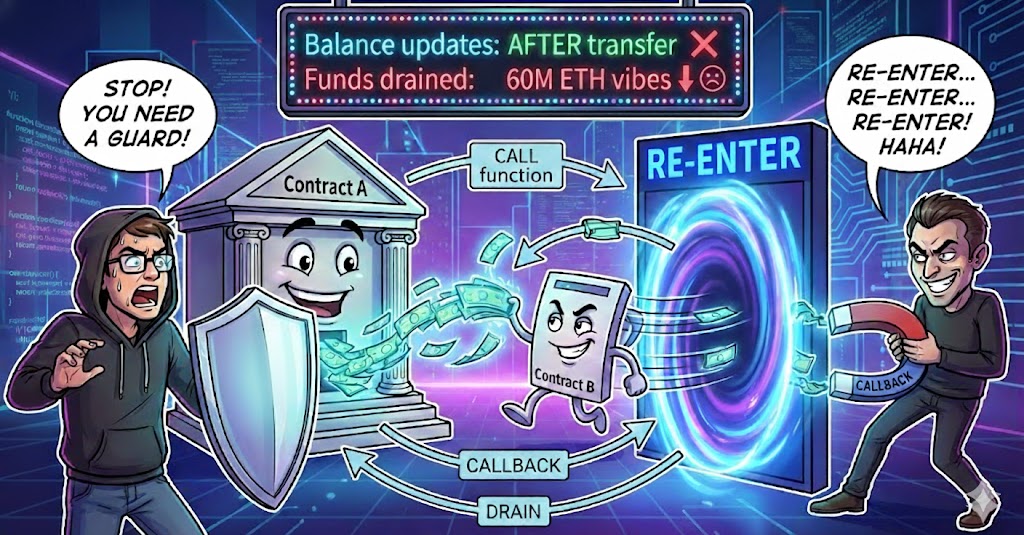
Typically comprising five different rankings: Critical, High, Medium, Low and Informational, the severity levels identified through an audit's findings will give an indication of how seriously to consider taking action against those discovered in your project. The findings considered as a cause for concern that require cautious consideration from you are findings that would be determined to be critical and high severity findings. Examples would be re-entrancy attacks, illegal external calls, or having malfunctioning access control allowing an individual access to your wallet could result in actual loss of your user funds, obtaining unauthorized access to information that should not be disclosed, or obtaining complete control of a contract you do not own.
Although the medium and low severity findings may not necessarily cause immediate financial damage to a business, they are indicative of design issues that may one day be exploited.
Medium and low-level findings would include items such as poor gas usage, deviation from established industry standards, or having "cosmetic" errors in your code.
Generally speaking, there will be low or informational findings on every project's code base; therefore, the question that requires addressing is not how many low and informational findings exist, it is how well your team worked through those findings.
Resolution Status: Fixed, Acknowledged, or Ignored?
This is where you distinguish between projects that are merely obtaining an audit badge for marketing purposes and those that are serious. The development team has a timeframe to address concerns found after the initial report. Each finding is then classified as either Resolved, Partially Resolved, Acknowledged, or Unresolved in the final report. "Resolved" indicates that the team fixed the issue and the auditors confirmed it. "Acknowledged" indicates that the team was aware of the problem but decided not to address it, sometimes with good reason and other times not.
A major warning sign is present if a project's final audit report has unresolved Critical or High issues. It indicates that code with known vulnerabilities was shipped by the team. If the audit indicates that there is a significant exploit vector and the status is "Acknowledged," I will not be tinkering with it, regardless of how nice the tokenomics appear or how hyped the community is.
Who Conducted the Audit? Reputation Matters.
Not all auditing firms are created equal. Well-known companies with years of experience, thousands of audits done, and in-depth knowledge of various blockchain ecosystems include OpenZeppelin, CertiK, ChainSecurity, and Hacken. They use both manual expert review and automatic tools, and more significantly, their reputations are at stake. Although a lesser-known auditor isn't always terrible, you should check their technique, track record, and whether their previous audits have held up in the face of actual attacks.
Additionally, be wary of projects that substitute internal security teams or self-audit. An independent audit is not what that is. Objectivity—having someone outside the project look over the code without any conflicts of interest—is the main goal of a third-party audit.
Beyond the Report: Operational and Tokenomics Risks
Safety is not assured by a spotless audit report. Token emission schedules that potentially dump on holders, admin key centralization, and treasury management are typically not covered by smart contract audits, which examine the code. While most reports strictly adhere to the code, some auditors, like Hacken, are beginning to incorporate operational risk evaluations (e.g., verifying whether the treasury wallet employs a multi-sig). Therefore, if the team has admin keys to a proxy contract or if the tokenomics are made to take advantage of late buyers, a project may still fail even if the contract is flawless.
The audit report should therefore be one component of your due diligence, not the entirety of it. Combine it with team credibility checks, on-chain analysis, and a thorough comprehension of the governance and fund management mechanisms of the protocol.
My Quick Checklist Before I Buy
Based on the audit report, this is the structure I personally use before investing in any cryptocurrency startup. Make sure the audit is real and accessible to the public first. If a project says it has been audited but refuses to release the results, leave. Second, see if the entire codebase or just a portion of it was examined. Third, consider severity: are any Critical or High results still pending? Fourth, confirm the independence and repute of the auditor. Fifth, make sure the code hasn't changed by comparing the audited commit hash with the deployed contract.
Last but not least, look at the date. An audit conducted two years ago on a protocol that has since received numerous modifications is practically out of date.
Knowing what to look for makes it easy to read smart contract audit reports. Perhaps fifteen minutes are needed. Additionally, those fifteen minutes could mean the difference between investing in a reliable protocol and entrusting your cryptocurrency to a codebase that has numerous unpatched vulnerabilities. Use the information that's right there.